News
Building a scientific career: choices, uncertainties and real opportunities

How can scientists prepare for the transition to the professional world? Between academia, industry and entrepreneurship, career trajectories are becoming increasingly diverse and are rarely linear. Drawing on firsthand experience and concrete insights, this article outlines five key takeaways to help young scientists navigate this transition and position themselves in the professional world.
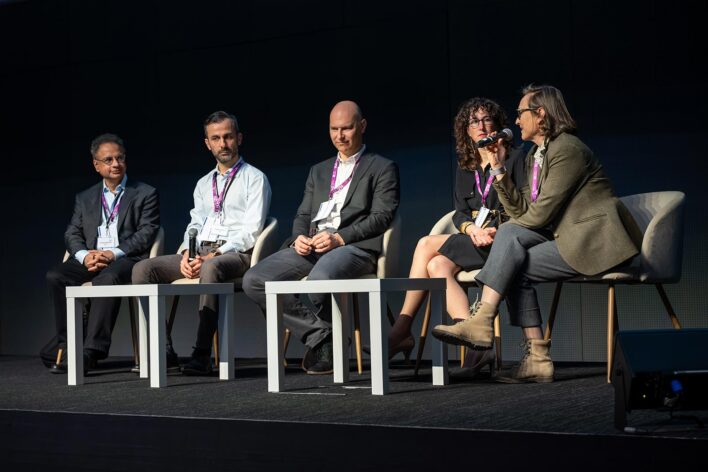
Three perspectives come together in the discussions featured on the Where Science Talks podcast: Omar Shalby (EPFL, co-founder of the startup Neurovia Bioelectronics), Fabien Carruzzo (PhD, University of Geneva, working at the interface between research and science communication), and Arnaud Cuilleret (career development and recruitment specialist at EPFL).
Five concrete takeaways emerge from their exchanges, offering practical guidance for preparing to enter the professional world.
Key takeaway #1 – Thinking about what comes next before the end of the journey
The transition to the professional world begins before the end of an academic path. Even without a clearly defined plan, starting early to explore what appeals—and what does not— helps reduce uncertainty and stress when the transition arrives.
This observation is shared by Fabien Carruzzo, who explains that the main challenge was not so much completing his doctorate as imagining his professional future beyond it, given the intensity of his studies and the pace of the PhD.
Key takeaway #2 – Choosing a specialisation that opens doors
Specialising early in a specific field can be a real advantage when entering the professional world. Choices made around specialisation help build a coherent career path that enables access to certain opportunities—such as internships, projects or entrepreneurial initiatives—more effectively than a generalist positioning.
This dynamic is illustrated by Omar Shalby, who specialised early in his studies in bioelectronics and brain implants. This positioning enabled him to gain international experience and later move into entrepreneurship.
Key takeaway #3 – Degrees matter, skills make the difference
A PhD remains a strong foundation, but it is no longer sufficient on its own. Communication skills, the ability to engage with non-scientific profiles, and an understanding of the challenges faced by a project or an organisation often make the difference outside academia. All three speakers emphasise that these transversal skills are still insufficiently developed within academic curricula, even though they strongly influence employability and the ability to engage meaningfully and long term in a professional project.
Key takeaway #4 – Not moving forward alone: networks, mentors and environment
The professional and institutional environment also plays a key role. Proximity between researchers, entrepreneurs, clinicians and institutions fosters encounters, mutual learning and the emergence of hybrid projects at the intersection of research and innovation.
Key takeaway #5 – Knowing when to say yes—and when to say no
Saying no to an opportunity can seem risky, especially at the beginning of a career. Yet the discussion highlights just how strongly these decisions shape a career path. Turning down a position misaligned with one’s values, accepting a temporary detour, or embracing a period of uncertainty — all these choices, taken together, often make sense as part of a coherent trajectory in hindsight.
In conclusion, three key ideas emerge from this episode: being curious and reaching out to others; experimenting, as long as the academic framework allows it; and, finally, identifying the specific value one can bring, and then developing it over time.
Scientific perspective: what research says about PhD career trajectories
A recent scientific review, based on the analysis of more than 70 international publications, shows that careers pursued by PhD graduates outside academia are attracting growing interest, yet remain insufficiently explored from a theoretical perspective. The literature highlights the importance of transferable skills, career development initiatives and transitions to non-academic sectors, while also pointing to persistent gaps: limited understanding of lived career paths, insufficient consideration of employers’ perspectives, and a lack of evaluation of institutional career-support mechanisms.
The authors call for a cultural shift within academia to normalise the diversity of professional trajectories, alongside structured institutional support and stronger collaboration with non-academic sectors — a conclusion that directly echoes the reference points shared in this podcast.