News
An Interview with Eric Ménétré, CEO and founder of dEEGtal Insights
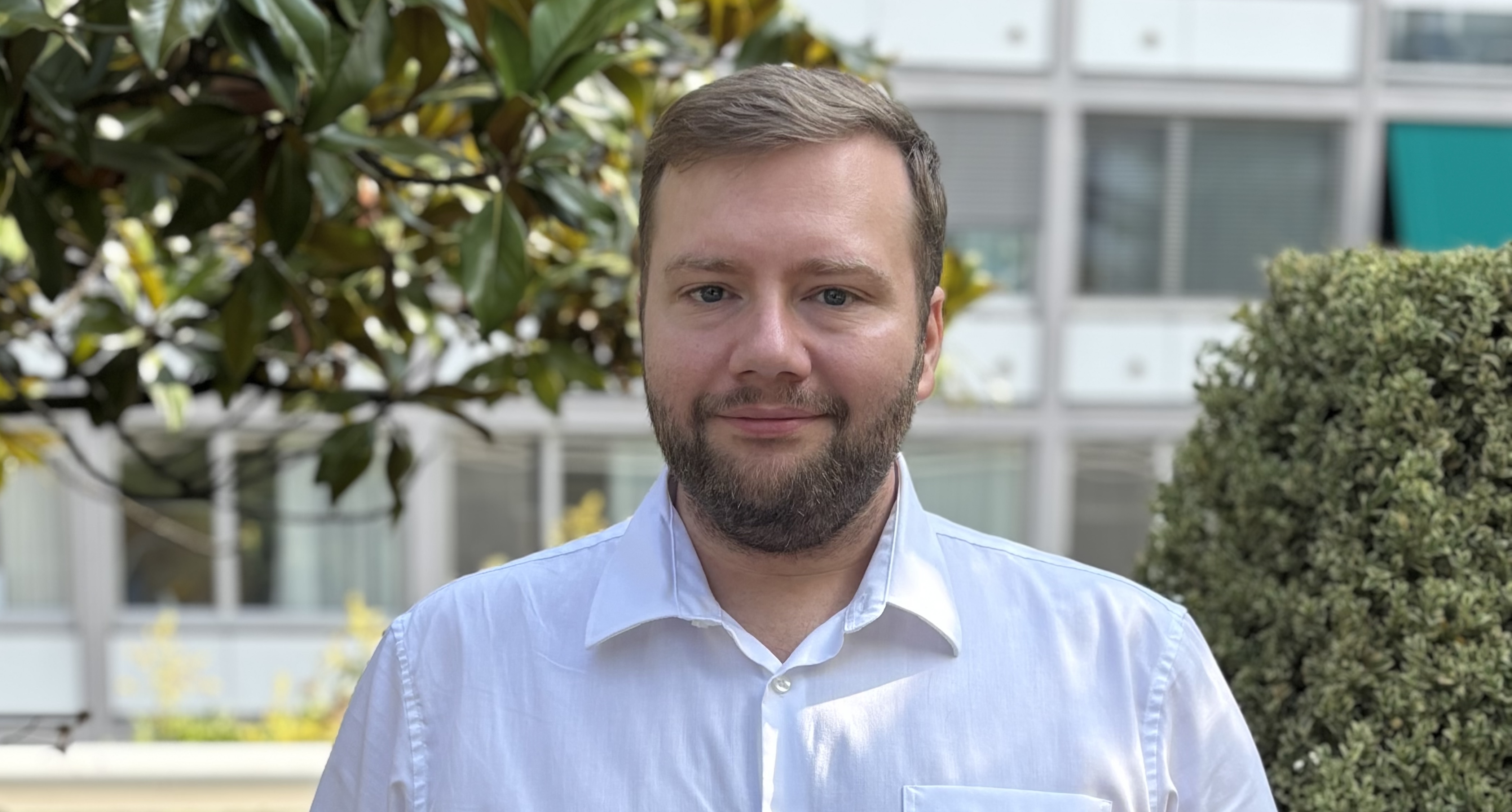
Inside Campus Biotech’s AI Hub, dEEGtal is accelerating epilepsy diagnosis
Launched in December 2025, Campus Biotech’s AI Hub — operated by Geneva University Hospitals (HUG) in partnership with the Wyss Center — is Geneva’s first dedicated hub for AI in healthcare. Bringing clinicians, researchers and AI specialists together within 1,000 m² of shared space, it is helping accelerate innovation in diagnostics, care and AI-driven neurotechnologies. Located at the heart of this ecosystem, dEEGtal is developing AI-powered EEG analysis tools to Improve the accuracy of epilepsy diagnosis. We spoke with one of its founders and CEO, Eric Ménétré.
-
dEEGtal is based at Campus Biotech, within the AI Hub. What does this environment bring to your day-to-day work?
Being a start-up means wearing many hats at once: scientific research, engineering, fundraising, regulatory compliance, and more. In that context, being based at Campus Biotech is a major advantage.
Beyond offering an exceptional working environment, the Campus functions as a true platform of expertise. The Wyss Center, which led our first funding round, provides its portfolio start-ups with access to scientific, technical and strategic expertise that a young company simply could not build in-house at this stage.
We also had the privilege of being the first start-up integrated into the Campus AI Hub, which brings together clinicians, researchers and entrepreneurs. Innovation does not happen in isolation; it functions as a chain: clinicians identify unmet needs, researchers explore potential solutions, and industry translates robust advances into practical tools for patients.
Bringing these three elements together under one roof is rare. It creates a virtuous dynamic that ultimately benefits both patients and innovation.
-
The AI Hub brings together clinicians, researchers and AI experts. Is this interdisciplinary proximity essential to designing AI that is truly useful in clinical practice?
Yes. Meaningful medical AI does not emerge from a linear development process, but from continuous interaction between clinical practice, research and industry.
Clinicians define the problems based on real-world practice. Researchers translate those problems into testable hypotheses and explore different approaches. Start-ups then select the most robust solutions and turn them into safe, viable and regulatory-compliant products.
These back-and-forth exchanges are essential. Without clinical input, the tool is disconnected from reality. Without research, it lacks scientific depth. Without industry, innovation cannot be turned into real-world impact.
The AI Hub enables precisely this ongoing cross-fertilisation, which is essential to developing AI that genuinely supports clinical practice.
-
Your background combines academic research, clinical practice, and entrepreneurship. How has this dual research–field culture shaped the way you designed dEEGtal?
Many start-ups are born in engineering labs with a technological solution in search of a problem. At dEEGtal, we did the opposite. We started from a scientific and clinical observation: the diagnosis of epilepsy, particularly after a first seizure, remains unreliable with current tools. At the same time, our team had strong expertise in electrical signal processing and artificial intelligence.
Our solution emerged from the intersection of these two dimensions: a clearly identified clinical need and technical mastery of the tools capable of addressing it. We designed our product with the end user in mind. An AI tool is only useful if it integrates seamlessly into existing workflows and provides information that is both understandable and actionable.
This research–practice culture lies at the very core of our DNA.
-
The diagnosis of epilepsy is often lengthy and uncertain, particularly after a first seizure. How can AI now overcome the limitations of routine EEG interpretation?
Each year, approximately five million patients are evaluated for a possible first epileptic seizure. Once the episode has passed, the neurologist must assess whether the event was truly epileptic or related to another condition.
One of the primary diagnostic tools available is the electroencephalogram (EEG), which records the brain’s electrical activity. It is a reliable and valuable technique. However, it presents a major challenge: brain activity signals are weak, and abnormalities can be brief and subtle — often imperceptible to the human eye. Even in patients with epilepsy, an EEG may appear normal.
This is where artificial intelligence adds value. Modern AI models excel at identifying complex patterns and can detect statistical signatures that visual analysis cannot reliably capture.
As a result, even when an EEG appears normal, our model can extract additional probabilistic information. This can help neurologists reach a diagnosis more quickly — potentially from the very first seizure — and initiate treatment earlier.
A faster diagnosis means earlier treatment and quicker protection against recurrent episodes.
-
More generally, how do you see the role of a hub such as the AI Hub at Campus Biotech in the evolution of neurology and psychiatry, particularly in the field of precision medicine?
Precision medicine lies at the heart of this transformation. Even today, most therapeutic decisions are still based on relatively standardized protocols, although no two patients are truly alike.
Artificial intelligence makes it possible to integrate dimensions that remain invisible to the human eye: subtle patterns in brain signals, longitudinal data collected from connected devices, and fine-grained individual characteristics. With richer and more granular information, treatments can be tailored more precisely to each patient. Beyond improved accuracy, AI also paves the way for a more preventive approach to medicine, enabling certain conditions to be detected before their clinical expression becomes apparent.
At dEEGtal, epilepsy is only a first step. Our ambition is to develop a foundation model capable of understanding the “language” of brain signals and interpreting EEG data at scale, with the goal of extending this approach to other neurological and psychiatric disorders.
In this context, a hub such as the AI Hub serves as a powerful catalyst in advancing truly data-driven neurology and psychiatry.