News
ATHENA-II: connectivity-guided brain stimulation to treat apathy in schizophrenia
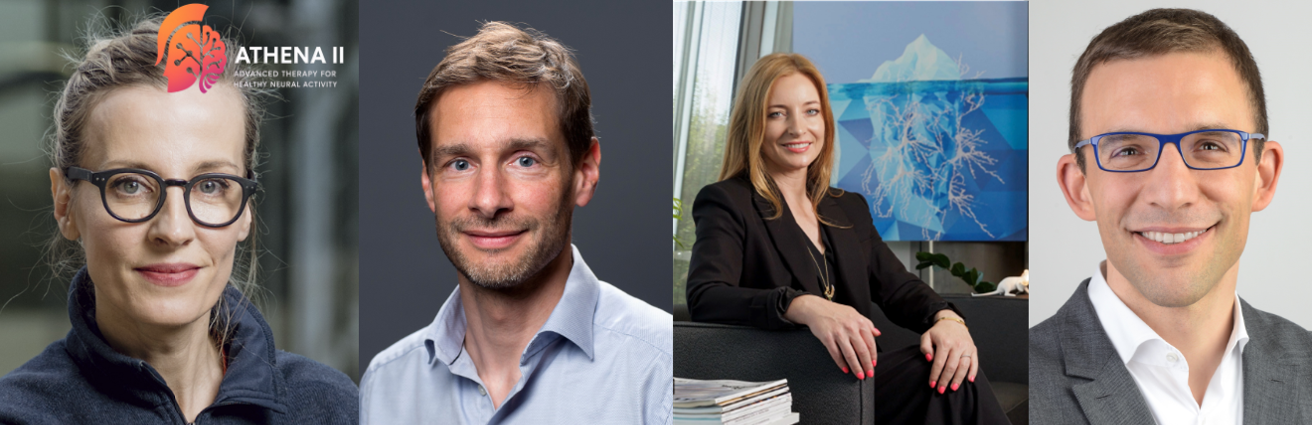
Apathy and loss of motivation are among the most disabling symptoms of schizophrenia — and still have no approved treatment. The ATHENA-II clinical trial is evaluating a non-invasive brain stimulation treatment whose target is determined by each patient’s own brain connectivity. The project, funded with CHF 4 million from the Horten Health Foundation through its competitive CONPRO programme (Consortium Projects for Clinical Translation), is led by Indrit Bègue, MD PhD (UNIGE/HUG), Mackenzie Weygandt Mathis, PhD (EPFL), Paul Klauser (CHUV) and Stefan Kaiser (UNIGE/HUG).
A major symptom, still without treatment
Schizophrenia affects around 24 million people worldwide. While hallucinations and delusions are its best-known symptoms, it is often the so-called negative symptoms — apathy, loss of initiative, social withdrawal — that have the greatest long-term impact on daily life, sometimes more lastingly than psychotic episodes themselves. Current antipsychotic medications alleviate psychotic symptoms but have little effect on motivation: no approved treatment today specifically targets apathy.
Apathy and motivation deficits shape long-term outcome in schizophrenia more than almost any other dimension, and there is still no approved treatment for them, Indrit Bègue, psychiatrist-neuroscientist, UNIGE/HUG, principal investigator of ATHENA-II
From a fundamental discovery to a pivotal clinical trial
ATHENA-II builds on more than a decade of research by Indrit Bègue’s laboratory into the brain circuits underlying motivation. This work revealed that a communication pathway between the cerebellum — long regarded primarily as the brain’s centre for motor coordination — and the ventral tegmental area, a key hub of the brain’s reward system, is disrupted in schizophrenia and closely linked to the severity of apathy.
This discovery led to ATHENA, an ongoing single-centre clinical trial at Campus Biotech evaluating personalised transcranial magnetic stimulation of this circuit in patients with chronic schizophrenia. Supported by the Leenaards Foundation (2023 Science Prize) and the Fondation Privée des HUG, ATHENA is expected to report its first results in 2028. ATHENA-II represents the next essential step: a multicentre pivotal trial, with an open label extension designed to confirm efficacy before seeking regulatory approval.
Testing personalized stimulation at scale
Over four years, ATHENA-II will recruit 140 patients at HUG and CHUV, across the schizophrenia spectrum, from first-episode psychosis to chronic illness. The trial is randomized, double-blind and sham-controlled, with an open-label phase in which all participants will later gain access to active stimulation. The accelerated protocol consists of eight brief stimulation sessions per day over five consecutive days — an approach already validated for treatment-resistant depression, here adapted to the brain network involved in motivation.
Indrit Bègue (UNIGE/HUG) leads the consortium and,as principal investigator, the clinical trial. Paul Klauser (CHUV) and Stefan Kaiser (UNIGE/HUG), site investigators in Lausanne and Geneva respectively, contribute their expertise in clinical research and advanced neuroimaging techniques. Mackenzie Weygandt Mathis (EPFL) heads the AI pillar.
Targeting the right circuit, in the right patient
ATHENA-II is evaluating cerebellar transcranial magnetic stimulation (TMS), a non-invasive technique. Its defining feature: rather than a standardized stimulation site, each patient’s target is derived from their own cerebellum–midbrain connectivity — a key hub of the brain’s reward circuit, identified by earlier work from Indrit Bègue’s laboratory.
In parallel, the AI pillar builds on xCEBRA-Time, a tool developed by the Weygandt Mathis and Bègue groups and validated across two independent cohorts — early psychosis and chronic schizophrenia¹. Using resting-state fMRI, it predicts, at the individual level, the severity of negative symptoms and cognitive function. It also reveals a disease-specific pattern involving the prefrontal cortex, posterior cerebellum and temporal regions, distinct from the pattern seen in the absence of schizophrenia. Within ATHENA-II, this approach will be used to develop predictive models of treatment response.
The project also uses advanced neuroimaging techniques, including ultra-high-field 7T MRI, to study how the treatment modifies brain activity.
A unique ecosystem behind this research
The CHF 4 million obtained through the Horten Health Foundation’s competitive CONPRO call for proposals is among the largest grants a foundation has awarded to psychiatric research in Switzerland. The project reflects the collaborative model built over more than a decade by the Synapsy Centre, bringing together clinicians, neuroscientists, engineers and computational scientists across the Lake Geneva region — including, at Campus Biotech, the teams already running ATHENA.
ATHENA-II could probably not have come about without ATHENA, or without the strength of the Campus Biotech ecosystem. It’s only within such an environment that this kind of research becomes possible — the one built across the Lake Geneva region, through the former NCCR-Synapsy and now the Synapsy Network, Indrit Bègue
¹ Bonhoeffer, M., Muratore, P., Mathis, M.W., Bègue, I. An explainable AI latent space of brain dynamics reveals a cerebello-prefrontal signature of schizophrenia symptoms. bioRxiv (2026). https://www.biorxiv.org/content/10.64898/2026.08.25.746991v1